When most people imagine a courtroom, they think of sharp suits, solemn judges, and the rhythmic tapping of a gavel echoing across marble floors. But the reality is far more intricate and human. Behind the polished wood and formal language lies a delicate dance between truth, persuasion, and justice. Every trial is a story being told—one of conflict, evidence, and emotion. Inside the courtroom, lives can change in a moment. What unfolds there is not just law—it’s life at its most intense.
A: Anywhere from a day to months, depending on charges, witnesses, motions, and court calendar.
A: No. Choosing not to testify can’t be used as evidence of guilt.
A: The court questions the juror; they may be excused to protect impartiality.
A: Often restricted by evidence rules unless relevant for a permitted purpose.
A: Judges can sustain objections, strike testimony, issue sanctions, or declare mistrial.
A: A halted trial due to fundamental error or deadlock; the case may be retried.
A: Acquittal follows not-guilty verdict; dismissal ends the case pre-verdict.
A: Generally no—double jeopardy bars retrial after acquittal.
A: Usually yes, but courts can limit access to protect safety, privacy, or fairness.
A: Sentencing, possible restitution, and appeal rights advisement follow.
The Opening Act: Setting the Stage for Justice
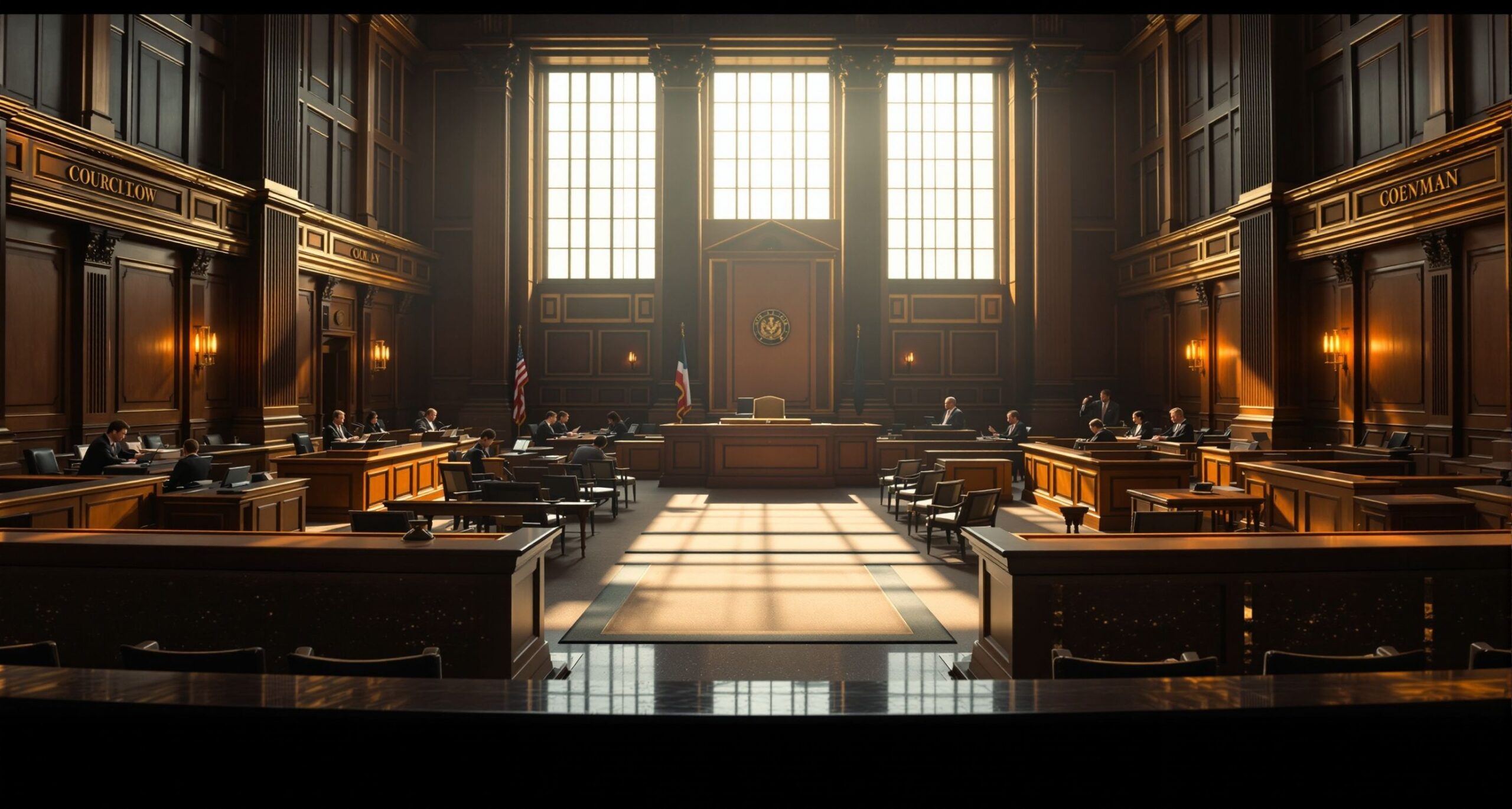
Every trial begins with the weight of anticipation. The courtroom fills with quiet murmurs as the judge enters, and the clerk announces the start of proceedings. This is the moment when order and ritual give structure to chaos. The first step, known as voir dire, involves selecting the jury—a group of citizens entrusted with the responsibility of weighing evidence and determining truth. Both the prosecution and defense scrutinize each potential juror, searching for bias, intuition, or empathy that could tip the scales.
Once the jury is seated, the opening statements begin. This is where attorneys outline their case, offering a glimpse into their narrative. For the prosecution, it’s a confident roadmap toward conviction; for the defense, it’s a promise to reveal reasonable doubt. The courtroom becomes a stage of competing stories, each side weaving facts and emotion into a version of reality they hope will resonate with the jury.
The Evidence Unfolds: Building the Case
After opening statements, the heart of the trial begins—the presentation of evidence. This is where facts meet interpretation. Witnesses take the stand, documents are introduced, and physical exhibits are carefully examined. Every word and object carries potential significance. The prosecution presents its case first, building its argument piece by piece like a carefully constructed wall. Each witness testimony adds another layer of proof designed to convince the jury beyond reasonable doubt.
But trials are never one-sided performances. The defense listens closely, ready to challenge, question, and dismantle the narrative being built. Cross-examinations become the crucible where truth is tested. Attorneys use precision questioning to expose inconsistencies, reveal motives, or undermine credibility. The atmosphere is electric—every silence heavy with possibility, every answer a potential turning point.
Evidence is not just about facts; it’s about perception. Jurors weigh the credibility of witnesses, the tone of testimony, and the demeanor of the attorneys. In this human theater of persuasion, the same piece of evidence can mean entirely different things depending on how it’s framed.
The Role of the Judge: Guardian of Fairness
Presiding over the drama is the judge—the ultimate arbiter of order and law. Far from being a passive observer, the judge is the steady anchor in the storm of debate. Their role is to ensure the trial proceeds fairly, that each side follows legal procedure, and that the jury hears only what is legally admissible.
Judges often rule on objections in real-time, deciding whether a question is proper or evidence is relevant. They act as referees, philosophers, and educators all at once. When tensions rise—and they often do—the judge restores calm, maintaining the courtroom’s dignity and focus.
At the end of the trial, the judge delivers detailed instructions to the jury, outlining how they must apply the law to the facts. These instructions may seem technical, but they guide the entire decision-making process. A single misinterpretation could mean the difference between guilt and innocence. The judge’s presence reminds everyone that justice is not about passion alone—it’s about principle.
The Jury’s Journey: Deciding the Fate
The jury holds perhaps the most profound power in the courtroom: the authority to decide another person’s future. Composed of ordinary citizens, jurors step into extraordinary responsibility. Throughout the trial, they listen silently, taking notes, absorbing testimony, and observing behavior. They are the invisible heartbeat of the process, quietly processing evidence while the lawyers battle before them. When the final witness testifies and closing arguments conclude, the jury retreats into deliberation—a private room where secrecy and sincerity reign. Here, twelve minds must become one decision. They debate evidence, revisit testimony, and struggle with the weight of their duty. Human emotion plays a significant role; empathy and doubt often collide.
Deliberation can take hours, days, or even weeks. Jurors must reach a unanimous verdict in most criminal cases, meaning one holdout can keep justice hanging in the balance. The process is both intellectual and emotional—balancing logic with morality, facts with intuition. When the verdict is finally reached and the jurors return to the courtroom, time seems to stand still.
The Climax: Closing Arguments and the Verdict
As the trial nears its end, both sides deliver their closing arguments—the final appeal to the jury’s reason and emotion. The prosecution revisits the evidence, tying together witness statements and facts into a cohesive narrative. The defense, meanwhile, urges the jury to question everything: the reliability of witnesses, the integrity of evidence, the very certainty of guilt.
Closing arguments are theater at its finest—eloquence meets strategy. Attorneys pace, pause, and persuade, their words weighted with consequence. They know that the jury’s memory will carry only fragments of the trial, so every phrase must strike with precision. It’s a moment of pure advocacy, where emotion and intellect blend into one final performance.
Then comes the verdict. The jury files back into the courtroom, faces solemn. The clerk asks the foreperson: “Has the jury reached a verdict?” The silence that follows is almost sacred. Whether it’s “guilty” or “not guilty,” the words reverberate through the air, sealing the fate of everyone involved. Relief, grief, shock—every emotion erupts simultaneously, and the courtroom exhales as one.
Beyond the Verdict: The Ripple of Justice
The conclusion of a trial doesn’t mark the end of its impact. Sentencing, appeals, and public reaction continue to shape what justice truly means. For defendants, a verdict can determine freedom or imprisonment; for victims, it can offer closure or disappointment. But beyond individuals, every trial contributes to a society’s evolving relationship with justice. High-profile cases can spark national conversations about race, gender, and fairness. They expose flaws in the system and inspire reform. Even lesser-known trials reaffirm the rule of law—the idea that every person, no matter their background, deserves a fair hearing. In this sense, every courtroom becomes a reflection of society’s conscience. The ripple effect of justice extends far beyond the walls of the courthouse, influencing public trust, policy, and future generations.
The Human Heart of the Law
At its core, a trial is not just a legal process—it’s a profoundly human experience. It’s where intellect meets empathy, where the abstract principles of justice become tangible realities. Every person in the courtroom—the judge, the attorneys, the jurors, the witnesses, the accused—carries the weight of truth. The courtroom is not a place of perfection but of pursuit. Mistakes happen, biases emerge, and outcomes can be unpredictable. Yet despite its imperfections, the trial remains one of the most powerful rituals of democracy. It is where law confronts humanity and seeks balance between accountability and compassion.
Inside the courtroom, justice is more than a verdict—it’s a living, breathing pursuit of truth. It’s in the raised voice of an attorney defending a client’s rights, in the quiet deliberation of a jury, in the stern but fair gaze of a judge. It’s the constant reminder that fairness, though fragile, endures through the courage of those who seek it.
Where Law Meets Life
When the gavel falls and the courtroom empties, what remains is not just a record of proceedings but a testament to the enduring spirit of justice. Trials remind us that the law is alive—shaped by people, tested by circumstance, and refined through every case. In an age of instant headlines and public opinion, the courtroom remains one of the few spaces where truth must be proven, not presumed. It demands patience, integrity, and reflection—qualities that define not just justice but civilization itself. Inside the courtroom, we see ourselves: our flaws, our fears, our hope for fairness. It is a place where reason challenges emotion, where ideals are tested, and where every verdict, whether triumphant or tragic, adds another chapter to the story of human justice. The trial may end, but the pursuit of truth never does.